
A temporary-overvoltage (TOV) analysis for a fault on a feeder inside the collector system of a wind or PV park is easy to read as a fault-current study, but that misses the point: the dangerous quantity is the overvoltage on the healthy phases, and the real question is whether the surge arresters can survive it for the time the internal protection takes to clear. TOV is a temporary phase-to-earth overvoltage lasting for cycles or longer, and it is assessed differently from fast-front or switching-impulse insulation stresses, because its duration is central. The study pulls together five threads at once — unbalanced-fault behaviour, converter current limits, collector-grid earthing, protection clearing time and surge-arrester survival. The types of overvoltage and temporary-overvoltage sources pages give the wider context.
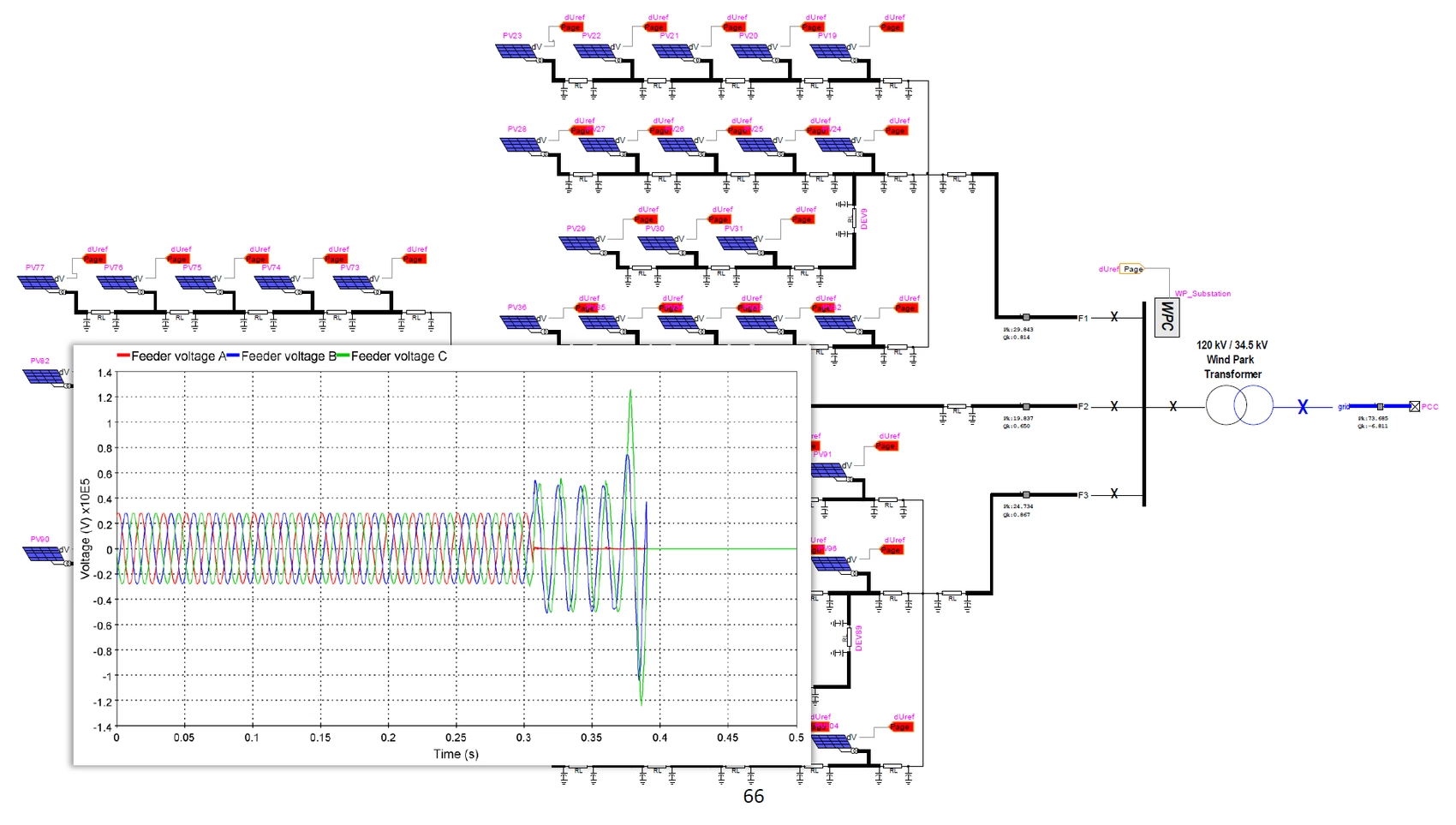



TOV Analysis for a Collector-Feeder Fault
Healthy-phase overvoltage from a collector-feeder fault, earthing, and arrester energy survival.
Series progress
21 of 30