
United Kingdom
Click to view details
UK Registered Office
Address18 Canberra Road
Gretna, Dumfriesshire
Scotland
DG16 5DP
Gretna, Dumfriesshire
Scotland
DG16 5DP
Text can be selected and copied.
Advanced high-current injection testing for grounding systems, including ground impedance, Earth Potential Rise, step voltage, touch voltage, transferred potential and earthing continuity assessment for large and complex electrical installations.
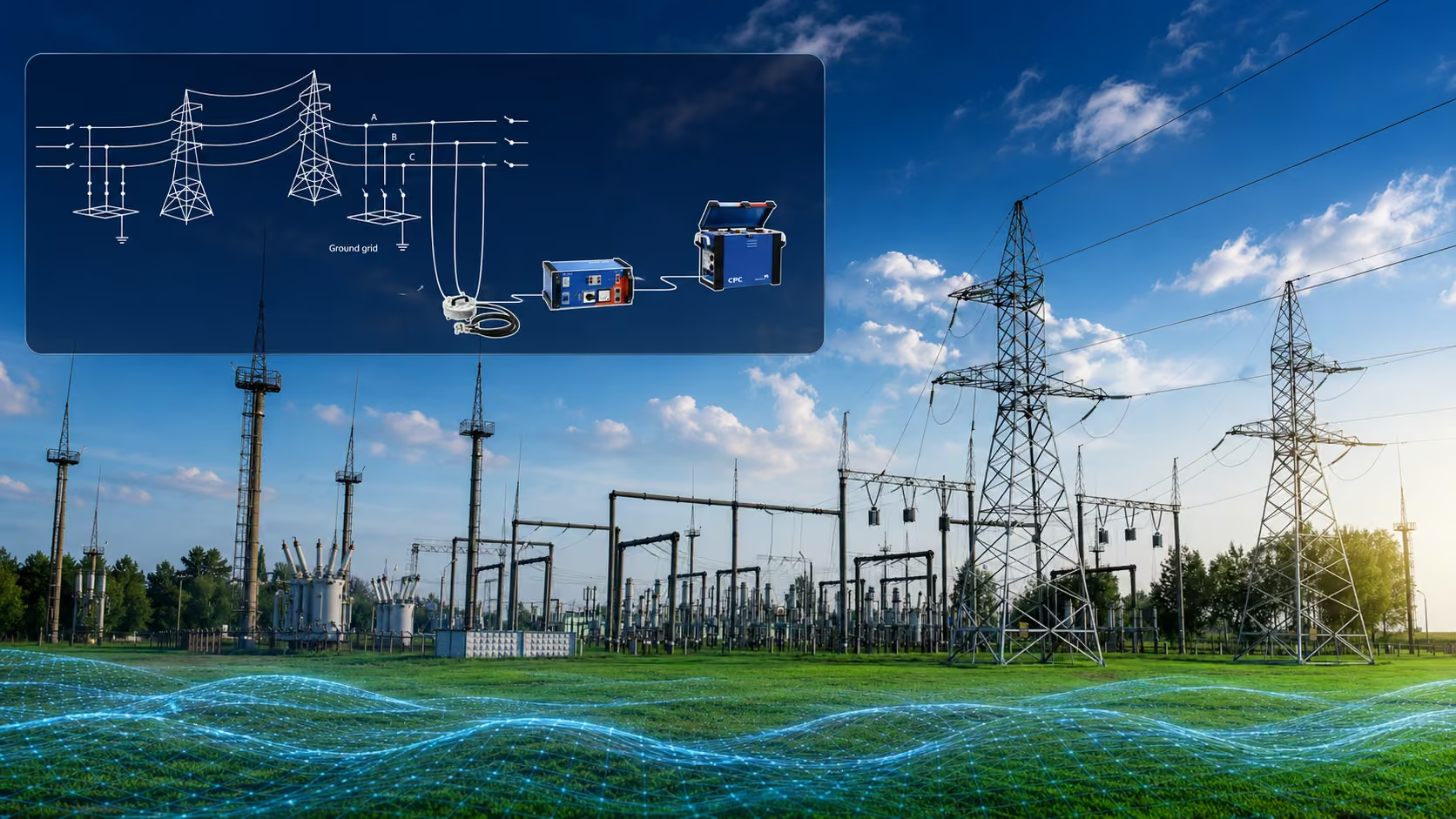
Specialist high-current injection testing and verification of grounding systems, including ground impedance, Earth Potential Rise / Ground Potential Rise, step voltage, touch voltage, transferred potential and earthing continuity assessment for large, complex and safety-critical electrical installations.
APS provides specialist high-current injection grounding system testing for large and complex electrical installations where the performance of the earthing system cannot be confirmed by visual inspection or simple low-current continuity checks alone.
Large substations, wind farms, solar farms, battery energy storage systems, HVDC converter stations, data centres, railway interfaces and industrial power networks may include extensive buried earthing grids, cable sheaths, overhead line earth wires, fences, reinforced foundations, metallic structures, lightning protection systems and nearby third-party conductive services. These interconnected elements can significantly influence the actual earth current distribution, Earth Potential Rise / Ground Potential Rise and resulting step and touch voltages during an earth fault.
High-current injection testing is therefore required where the safety performance of the installed earthing system must be demonstrated under realistic fault-current return conditions. APS can support this requirement using advanced OMICRON-based test methods, including CPC 100, CP CU1, HGT1 handheld grounding tester and associated software tools such as Primary Test Manager™.
The testing approach can be used to assess ground impedance, Earth Potential Rise / Ground Potential Rise, step voltage, touch voltage, transferred potential, current distribution and earthing continuity. The results can be interpreted against relevant project criteria and recognised standards such as EN 50522, IEEE 80 and IEEE 81, where applicable. APS supports clients by verifying whether the installed grounding system can safely control voltage rise during credible fault conditions and whether accessible metallic parts, fences, gates, equipment enclosures and external conductive services remain within acceptable safety limits.
APS provides high-current injection grounding system testing services for projects where earthing safety, fault-current distribution and personnel protection must be technically verified.
These services are suitable for large or interconnected electrical installations where the true grounding system may extend beyond the formal site boundary and where conventional low-current testing may not provide a representative safety assessment.
The objective of high-current injection grounding system testing is to verify that the installed earthing system can safely control voltage rise during an earth fault and limit dangerous voltage differences at accessible locations.
APS combines practical site-testing experience with advanced OMICRON-based measurement methods to help clients understand how fault current is distributed through the grounding system, metallic return paths and surrounding infrastructure. The testing can identify whether ground impedance, Earth Potential Rise, step voltages, touch voltages, transferred potentials and continuity conditions are within acceptable project or standard-based limits.
The assessment supports commissioning, safety verification, compliance evidence, earthing design validation, fault-current distribution review, asset protection and operational risk reduction.
By combining high-current injection testing, step and touch voltage measurement, ground impedance assessment, continuity verification and engineering interpretation, APS helps clients demonstrate that grounding systems are performing as intended and that personnel safety risks have been properly assessed under credible fault conditions.