
United Kingdom
Click to view details
UK Registered Office
Address18 Canberra Road
Gretna, Dumfriesshire
Scotland
DG16 5DP
Gretna, Dumfriesshire
Scotland
DG16 5DP
Text can be selected and copied.
APS provides specialist assessment of electromagnetic interference, impressed voltages, and AC corrosion risks affecting pipelines, railways, buried metallic infrastructure, and assets located near high-voltage power corridors.
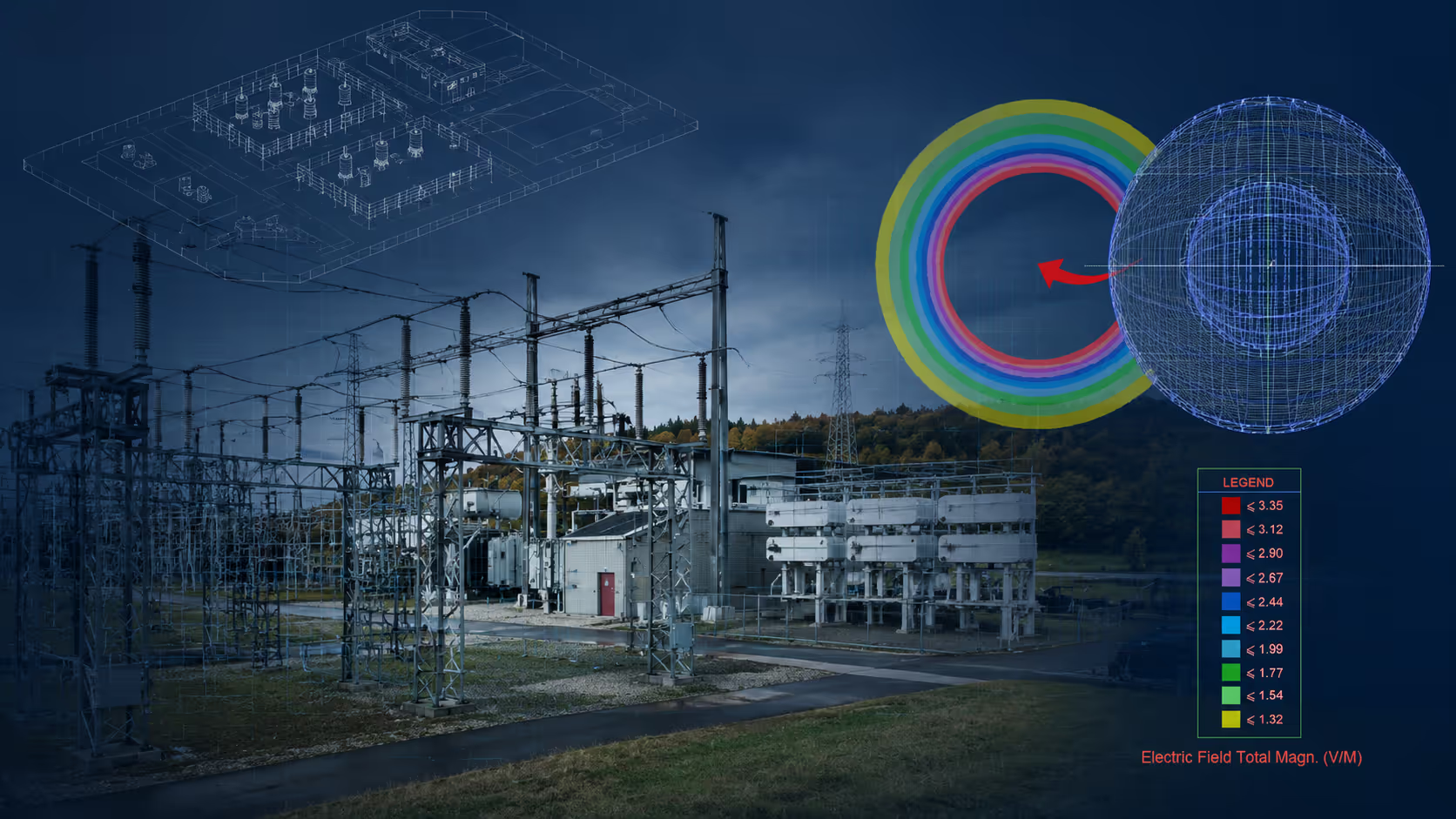
Specialist studies for electromagnetic interference, impressed voltage, AC corrosion risk, grounding interaction and mitigation design for buried and exposed metallic infrastructure located near high-voltage power corridors.
APS provides specialist engineering studies for electromagnetic interference, impressed voltage and AC corrosion protection affecting pipelines, railway infrastructure, telecommunication assets, buried metallic utilities, cable systems, fences, substations and other exposed conductive infrastructure located near high-voltage power corridors.
Where high-voltage overhead lines, underground cables, electrified railways, substations or HVDC systems share corridors with metallic infrastructure, unwanted voltages and currents can be transferred by inductive, conductive and capacitive coupling. SES describes Right-of-Way Pro as software used to compute voltages and currents imposed on exposed metallic utilities by power lines, power cables and electrified railways through these coupling mechanisms.
These effects may create safety risks, touch voltage concerns, coating stress, interference with telecommunication circuits, cathodic protection disturbance, and accelerated AC or DC corrosion of buried metallic assets. APS supports clients by identifying these risks at an early stage and developing technically robust mitigation strategies using detailed electromagnetic modelling, site data and engineering assessment.
Studies can be carried out using the CDEGS software suite, including modules and packages such as Right-of-Way Pro / ROWCAD, HIFREQ, FFTSES, RESAP, MALZ, SPLITS, TRALIN and CorrCAD, depending on the project requirement. CDEGS is described by SES as an integrated software environment for grounding, electromagnetic fields, electromagnetic interference, AC/DC interference mitigation and cathodic protection-related studies.
APS can assess normal operating conditions, fault conditions, lightning-related transients, switching transients, impressed voltages, coating stress voltages, current density, safety voltages and mitigation performance. Where required, mitigation options such as gradient control wires, zinc ribbon, bonding, decoupling devices, earthing improvements, route optimisation and separation-distance review can be evaluated to support a practical, compliant and cost-effective solution.
APS provides study-led EMI, impressed voltage and corrosion protection services for projects where buried or exposed metallic assets may be affected by nearby power infrastructure. The service combines electromagnetic modelling, soil interpretation, asset layout review, fault condition assessment, corrosion risk evaluation and mitigation design.
These studies are suitable for projects where power infrastructure and metallic assets are located close to each other, particularly where long parallel exposure, shared rights-of-way, high fault levels, weak soil conditions or sensitive buried assets may increase interference and corrosion risks.
The objective of the study is to provide a technically justified assessment of electromagnetic interference, impressed voltage and corrosion-related risks before they become safety, design, compliance or operational issues.
APS combines practical earthing and site-testing experience with detailed electromagnetic modelling to help clients understand how nearby power infrastructure may affect pipelines, railways, buried metallic services and exposed conductive assets. The study can identify whether induced voltages, coating stress voltages, touch voltages, current densities or transferred potentials are within acceptable limits, and whether mitigation is required.
The assessment supports early design decisions, route selection, separation-distance review, asset protection, cathodic protection coordination, safety compliance and mitigation system optimisation. This allows project teams to move from uncertainty to a clear engineering position supported by modelling evidence, practical mitigation options and technically robust recommendations.
By combining CDEGS-based simulation, site data, asset geometry, fault current information, soil resistivity interpretation and mitigation review, APS helps clients reduce safety risks, protect buried infrastructure, minimise corrosion risk and demonstrate that electromagnetic compatibility and corrosion protection requirements have been properly considered.