
Lightning and fast-front grounding studies ask a different question from conventional power-frequency earthing. A power-frequency earth assessment — earth potential rise, touch and step voltage — can often use a single low-frequency resistance. A lightning study cannot: the current is broadband, and during its first microseconds the tower footing or earth electrode behaves as a high-frequency distributed system, not a single equipotential object. Current propagates along the buried conductors, voltage drops occur along the electrode, soil capacitance becomes relevant, and the soil’s own resistivity and permittivity change with frequency. So whenever lightning performance, backflashover, transferred voltage or transient grounding impedance is being assessed, the electrode and soil should be treated at high frequency.
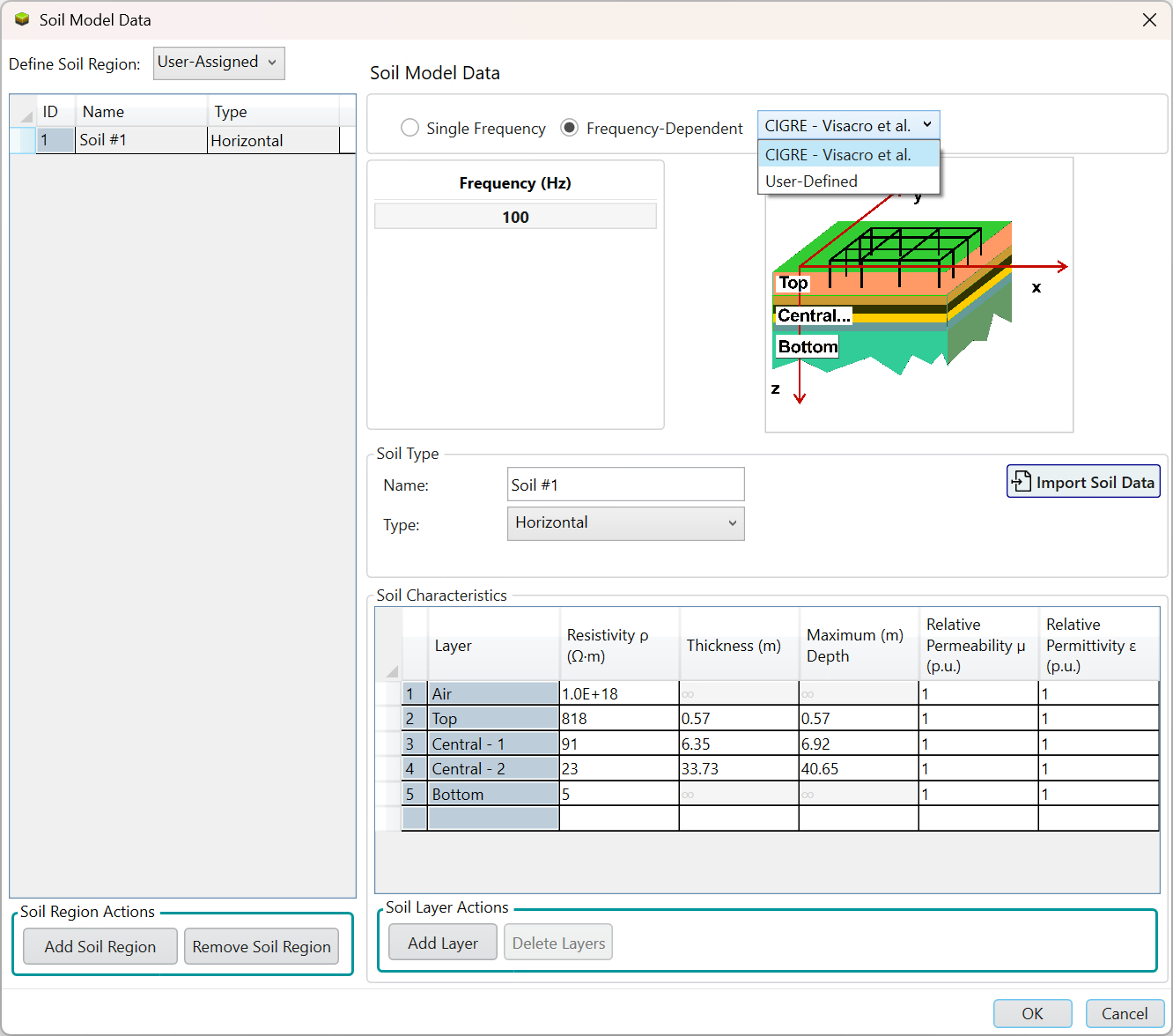



Frequency-Dependent Soil & Tower-Footing in HIFREQ
Impulse impedance, the Alipio–Visacro soil model and effective counterpoise length in CDEGS HIFREQ.
Series progress
11 of 16