
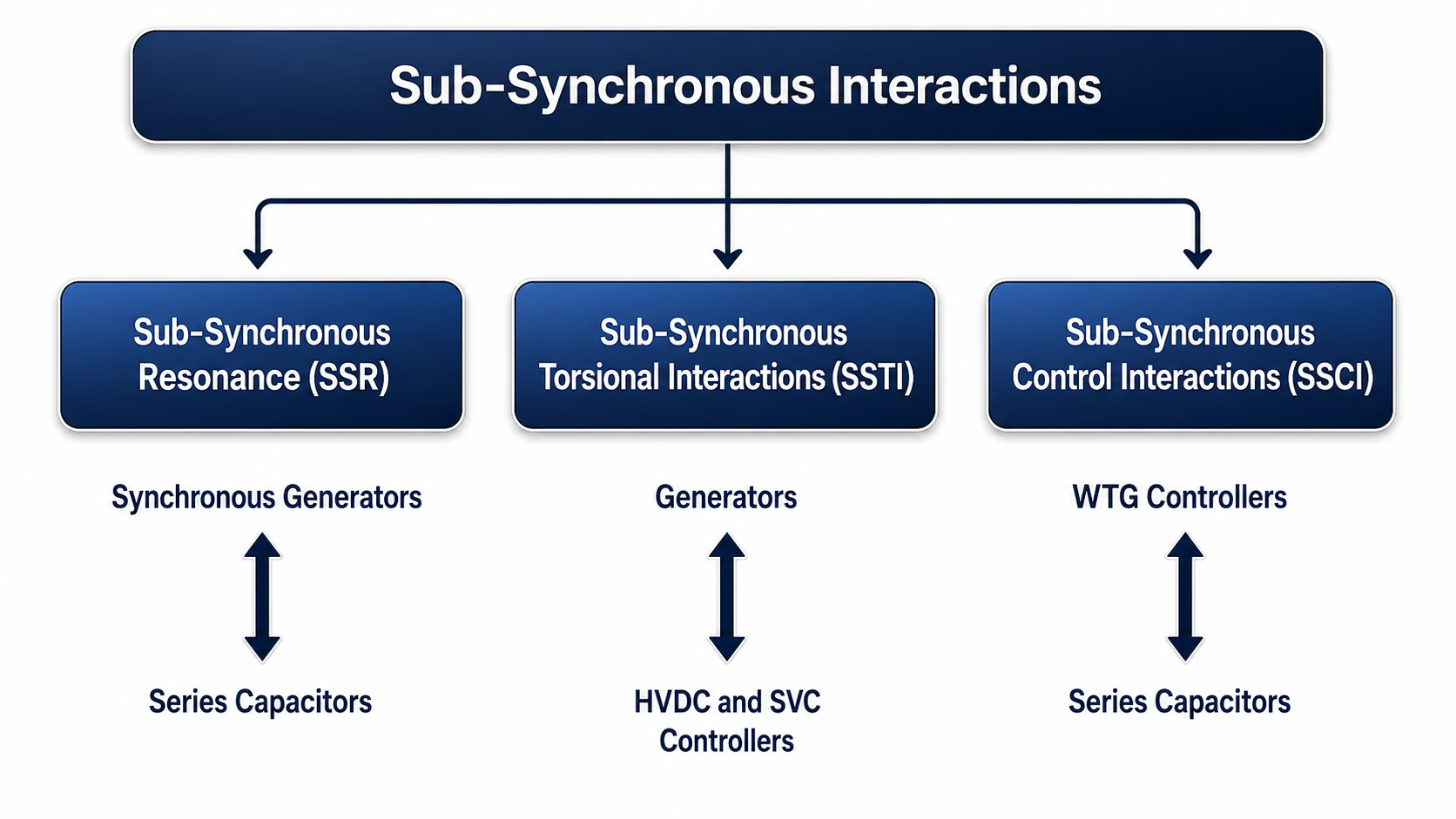
This is the final guide, and it brings the series together. Building on every page before it — the IBG characteristics, the inverter, the RMS / phasor and EMT models, and the frequency, voltage, small-signal and islanding studies — it uses all of them to explain the converter interaction phenomena that decide when detailed EMT, impedance-based analysis or EMT validation becomes necessary. A converter’s controls are fast and high-gain, and once several of them — plus HVDC ties and FACTS devices — sit electrically close together, they stop behaving independently. They interact, and in a weak grid that interaction can grow into a sustained oscillation. The earlier guides told you how to build an inverter-based-generation (IBG) model; this one closes the series by explaining what can go wrong when many fast models are connected — control interaction, SSCI and impedance-based stability — and how to make the final choice between RMS, EMT and impedance-based analysis.


Control Interactions, SSCI and Model Selection
The capstone: converter-grid interaction, SSCI, impedance-based stability and the final RMS / EMT / impedance choice.
Series progress
12 of 12