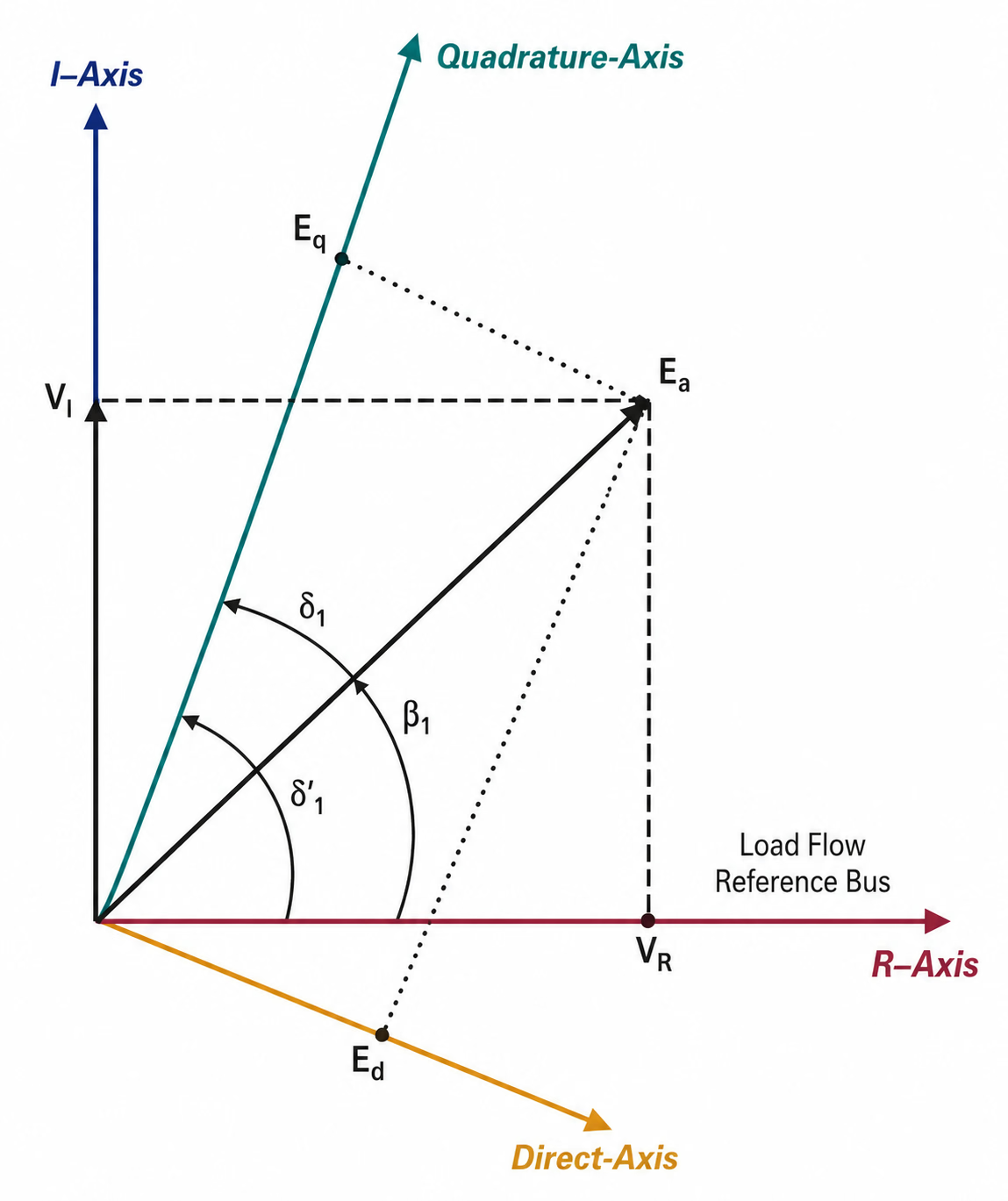
In EMTP® the Park transformation is part of the internal synchronous-machine solution — the user does not build the transformation matrix by hand — but understanding it is essential for interpreting results and entering data correctly. The dq0 framework is how the program represents stator electrical behaviour, field- and damper-winding dynamics, the flux-current relationships, speed-voltage coupling, electromagnetic torque, rotor mechanical interaction and saturation where included.
This is also why EMTP® asks for d- and q-axis reactances and time constants, field data and damper representation: those parameters correspond to the physical axes of the transformed machine. A user thinking only in phase quantities may not see why the d-axis synchronous, transient and subtransient reactances \(X_d, X'_d, X''_d\), their q-axis counterparts and the d-axis short-circuit time constants \(T'_d, T''_d\) are needed — the dq0 model explains their role. The full subtransient, transient and steady-state behaviour behind these symbols is covered on the parameters and short-circuit response page; here they appear only as a bridge to it.
After transformation and initialisation, a few quick checks confirm the dq0 model is behaving:
- The reconstructed abc voltages and currents are physically sensible.
- Active and reactive power agree between the abc and dq0 frames.
- The zero-sequence current is zero when no zero-sequence path exists.
- The torque sign is consistent with generator or motor operation.
- The steady-state dq quantities are stable before the disturbance is applied.