This page complements the capacitive-switching notes by covering the opposite type of duty: switching a mainly inductive load, where the current is usually small but the recovery voltage and reignition risk can be severe.
A shunt reactor is an inductive load used to absorb reactive power and help hold voltage down, particularly on long lines or cables under light load. Reactors are switched often — sometimes daily — to follow changes in system loading, so the breaker also needs good mechanical endurance.
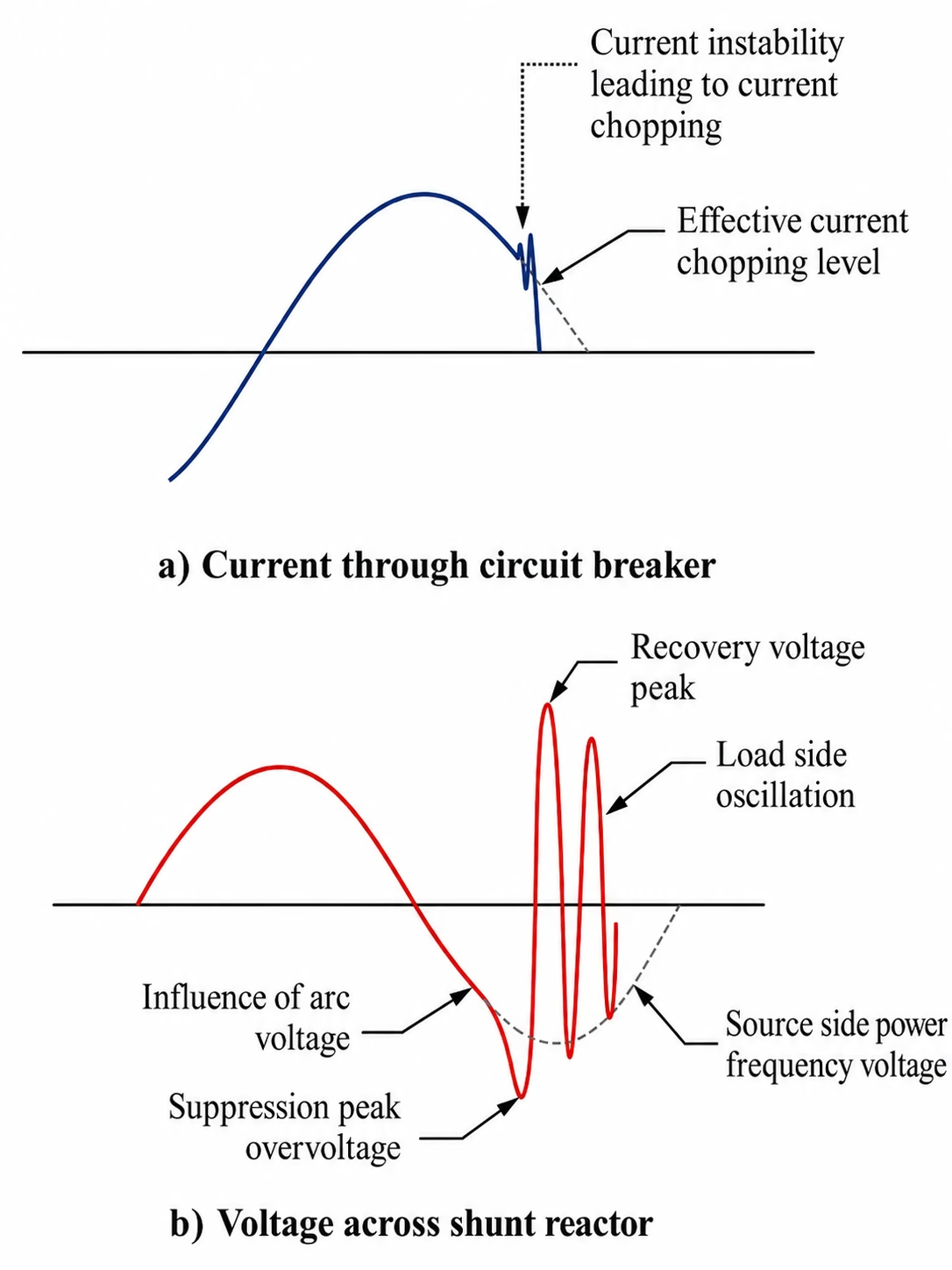
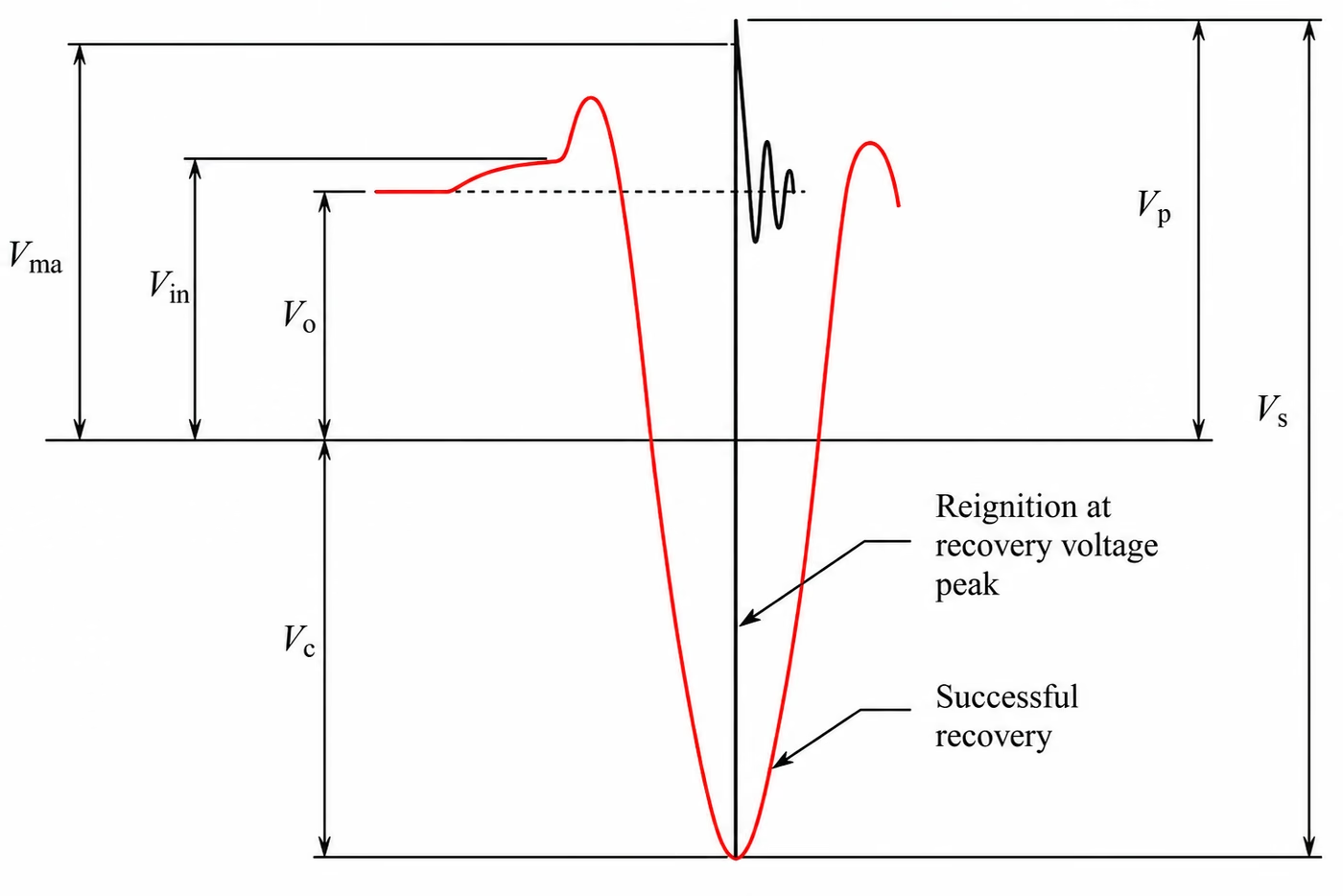
The reactor current is usually relatively small compared with fault current, commonly of the order of a few hundred amperes, so the challenge is normally not thermal interruption capability but dielectric recovery and overvoltage control. The difficulty is that the breaker may force the small inductive current to zero before its natural zero — current chopping — trapping energy in the reactor and producing an overvoltage across the open contacts. Two effects dominate: current chopping and reignition.
The duty is therefore voltage-dominated rather than current-dominated: the breaker can usually interrupt the current, but it must then withstand the recovery voltage without reignition.